
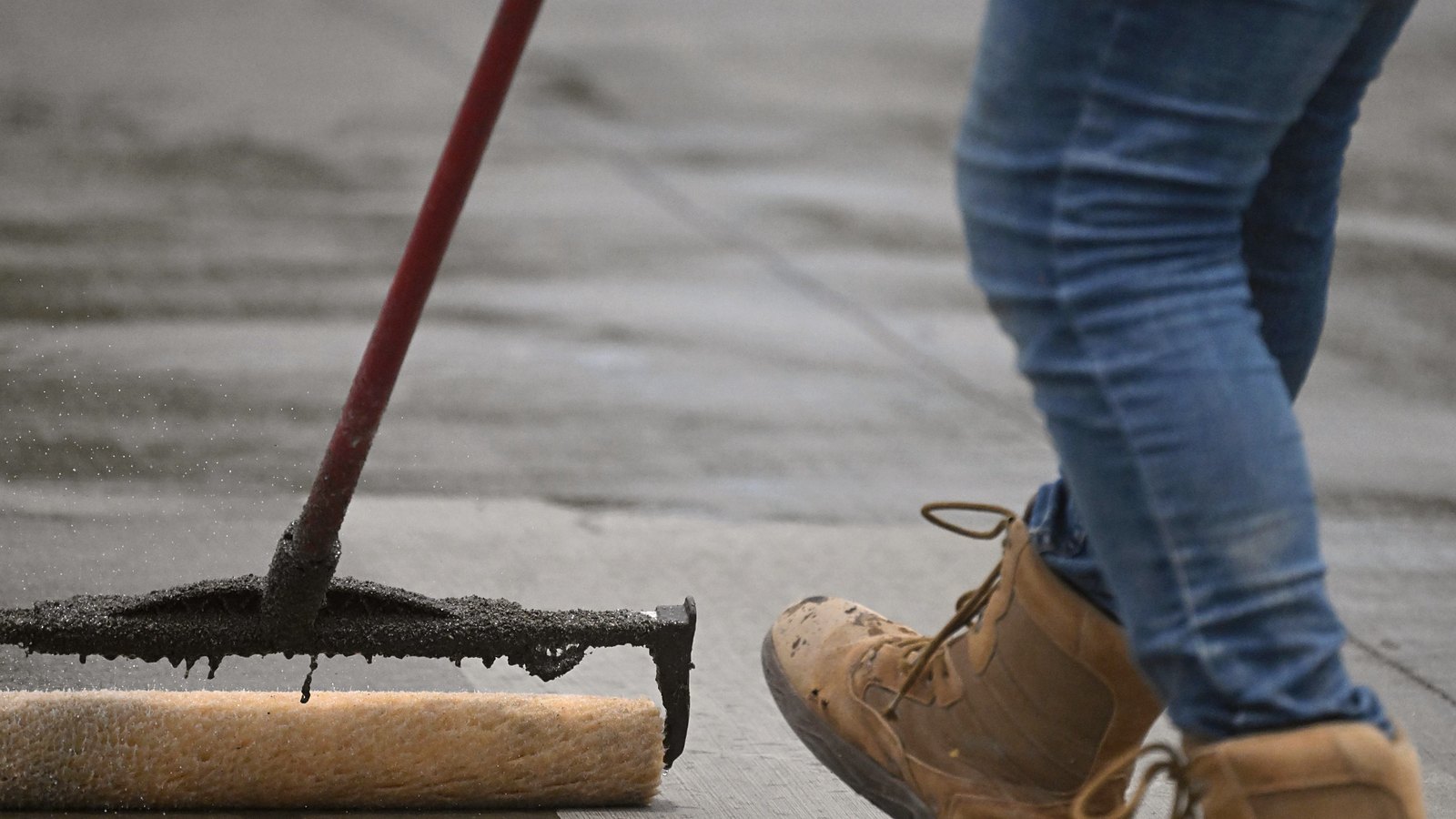
A polyurea primer is the thin coat that goes between the concrete and the polyurea membrane. It seals the pores, binds loose dust and gives the membrane a firm grip. In fact, many lining problems start below the membrane, not in it. This guide shows how to check the concrete, how to choose a primer and how to prepare the surface. Every figure comes from Krypton Chemical’s published datasheets.
Contents
- Why the polyurea primer matters
- What the concrete must offer first
- How to choose a polyurea primer
- Mechanical preparation of the concrete
- Weather, dew and condensation
- The double primer route for hidden moisture
- Surface preparation on Target projects
- Frequently asked questions
- Book a concrete survey in Cairo
Why the polyurea primer matters
Hot-spray polyurea sets very fast. For example, the Polyurea Rayston datasheet gives a gel time of 4 seconds at 25 °C. So the membrane has no time to soak into the concrete or fill small holes. If air or moisture escapes from the pores, it can leave bubbles behind.
The same datasheet links “bubbles or open holes in the membrane” on porous concrete to a missing primer. Its answer is simple: apply an epoxy-type primer first. In other words, the primer is part of the system. It is not an optional extra.
What the concrete must offer first
Before any primer goes down, the slab has to pass a few checks. The Polyurea Rayston datasheet asks for a surface that is:
- flat, level, even and regular;
- compact and strong, with a pull-off result of at least 1.4 N/mm²;
- free from cracks, which must be repaired first;
- clean and dry, with no dust, loose bits, oil or laitance.
In addition, the slab should be between 10 °C and 40 °C, with moisture below 4%.
The Polyurea Primer datasheet (PDF) adds its own limits. The concrete needs a cohesion of at least 1.5 MPa and a compressive strength of at least 25 MPa. It must also be free of water and water vapour. On new concrete or mortar, wait at least 21 days so the slab can dry.
Simple checks on site
A pull-off test shows if the surface is strong enough. A moisture reading shows if it is dry enough. Both checks are quick, but they decide which primer you can use. So write the readings in the site report before work starts.
How to choose a polyurea primer
Krypton makes several primers, and each one suits a different surface. The table sums up the key limits from each datasheet.
| Primer | Type | Made for | Key limit (datasheet) | CE marking |
|---|---|---|---|---|
| Polyurea Primer | Cold-applied, two-component pure polyurea | Rigid, porous and dry supports | Moisture below 4%; slab 10–25 °C | Not stated |
| Rayston Epoxy 100 | Two-component epoxy | Completely dry surfaces | Humidity below 4% | EN 13813, DoP 24-730 |
| Humidity Primer | Two-component, water-based epoxy | Supports with 4–8% moisture | Not for groundwater pressure above 1.5 N/mm² | EN 13813, DoP 24-720 |
| Polyurea Primer Flex | Cold-applied, two-component pure polyurea | PVC, EPDM and asphalt felts | Not for polyolefins | Not stated |
Polyurea Primer for dry concrete
Krypton’s Polyurea Primer guide describes a fast-curing primer for rigid, porous and dry supports. It bonds, seals and firms up the concrete before a polyurethane or polyurea membrane. Expect 300–400 g/m². Also, the air should be 10–30 °C, with relative humidity no higher than 60%. Its datasheet reports adhesion to concrete above 5 N/mm² (EN 13892-8).
Rayston Epoxy 100 for fully dry surfaces
Rayston Epoxy 100 is a two-component epoxy primer “for completely dry surfaces”. Its datasheet calls it the right choice where humidity is below 4%. Apply 200–500 g/m² by brush or roller. On big areas, Krypton suggests a light spread of quartz sand. This gives a rough surface, so the next coat grips better. ETA 16/0148 also lists it in the Polyurea Rayston roof kit at 0.3–0.8 kg/m².
Humidity Primer for damp concrete
Damp concrete is common in tanks, basements and old roofs. Humidity Primer is a water-based epoxy for supports with 4–8% moisture. Its datasheet lists “waterproofing treatment of tanks and other water management facilities” among its uses. However, it does not help when the water comes from the ground at pressures above 1.5 N/mm². The ETA lists it in the roof kit at 0.3–0.5 kg/m².
Polyurea Primer Flex for old membranes
Some roofs still carry old PVC, EPDM or asphalt felts. Polyurea Primer Flex is made for these flexible supports, mainly before hot-applied membranes. Note that its datasheet excludes polyolefins. Expect 200–400 g/m².
Mechanical preparation of the concrete
First, the crew prepares the concrete by machine, with high-pressure sand or abrasion. The aim is to remove the weak top skin and open the pores. Next, an abrading disc takes off sharp bumps. Then the crew brushes or vacuums away all dust and loose bits. Our page on sand blast works explains the blasting step.
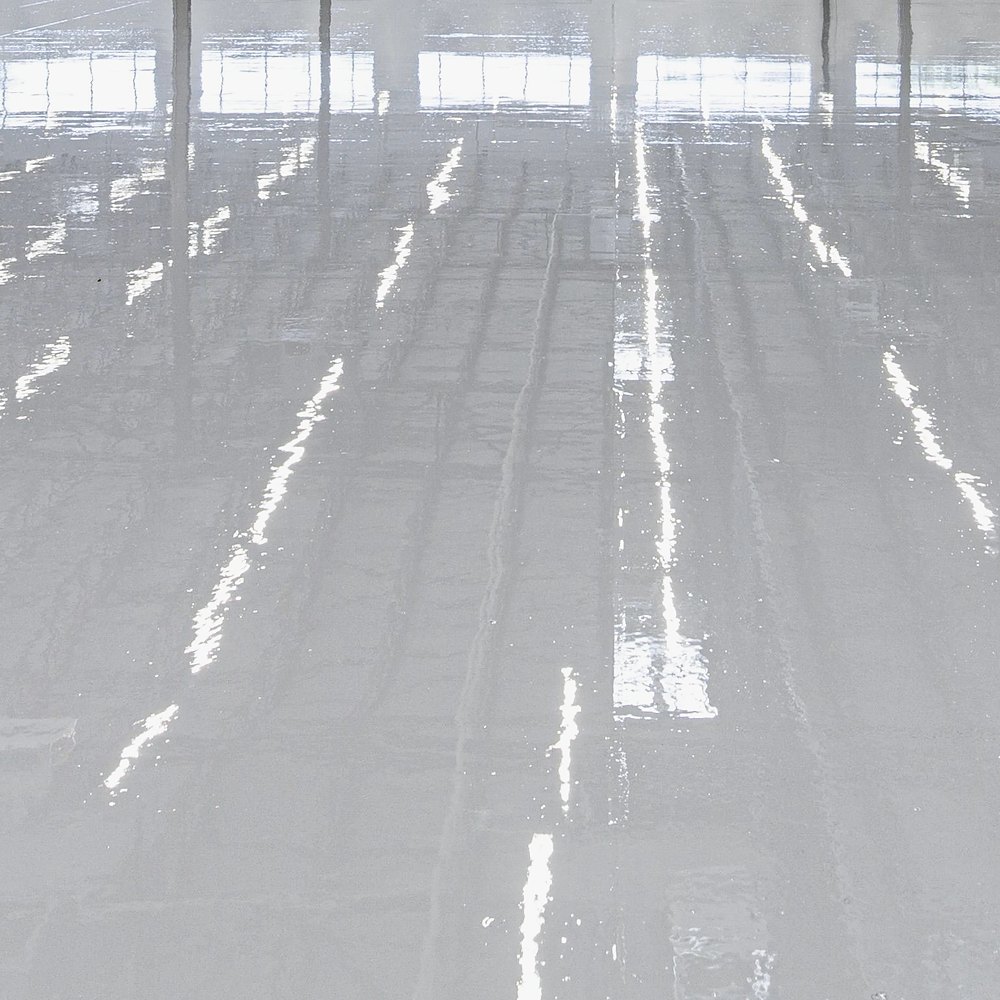
Repair cracks and holes before priming. Also level the low spots, because the membrane follows every dip and ridge. The International Concrete Repair Institute (ICRI) publishes useful guidance on surface preparation for coatings.
Weather, dew and condensation
The weather on the day matters as much as the slab. The Polyurea Rayston datasheet asks for air at 10–40 °C and relative humidity below 85%. Higher humidity does not stop the cure. But it can make bonding harder, because water condenses on the surface.
The primers have tighter limits. For example, Polyurea Primer asks for relative humidity no higher than 60%. Humidity Primer is not recommended in cold, humid weather. In Egypt, early mornings near the coast or the Nile can leave dew on a cool slab. So check the surface itself, not just the forecast.
The double primer route for hidden moisture
Sometimes the crew suspects moisture but cannot prove it. For this case, the Polyurea Rayston datasheet gives a clear route:
- Apply a first coat of epoxy primer as it is.
- Apply a second coat of epoxy primer.
- Spread quartz sand over the second coat.
After that, wait. The datasheet says to spray the membrane only after the epoxy primer has fully cured. Rayston Epoxy 100 takes a second coat once the first is dry to touch, and within 24 hours. In addition, the Humidity Primer datasheet (PDF) gives its own drying times for hot, cold and humid days.
Surface preparation on Target projects
Every Target job starts with a site survey and a check of the concrete. For example, our team carried out internal tank lining at Iconic Tower in the New Administrative Capital. Our project records describe that scope as pure polyurea. They do not name the primer or membrane products, so we do not link that job to any product in this guide.
Frequently asked questions
Do I always need a polyurea primer on concrete?
On porous concrete, the datasheet makes the case clearly. It links bubbles and open holes to a missing primer. Your project specification then sets the exact product.
How long after casting can I prime new concrete?
The Polyurea Primer datasheet says to wait at least 21 days on new concrete or mortar.
Which primer suits damp concrete?
Humidity Primer is made for supports with 4–8% moisture. However, it does not suit water pushing up from the ground at pressures above 1.5 N/mm².
Can I prime over an old roof membrane?
For PVC, EPDM or asphalt felts, Krypton offers Polyurea Primer Flex. For other routes, see our guide to re-roofing over an existing membrane.
When can the membrane go on?
Only after the primer has fully cured, according to the Polyurea Rayston datasheet. Drying times change with heat and humidity, so check each primer’s datasheet.
Book a concrete survey in Cairo
Send us photos, drawings or the age of the slab. Then we will test the concrete and propose a polyurea primer and membrane build-up, with its datasheets.
- Office: 48 El-Horreya St, Heliopolis, Cairo
- Phone: +20 120 226 9326
- Email: admin@targetsw-eg.com
- Online: contact Target Engineering
For more background, read our polyurea waterproofing guide and our comparison of hot and cold applied polyurea. Target also works from offices in Abu Dhabi and Kenitra for regional projects.

No comment