
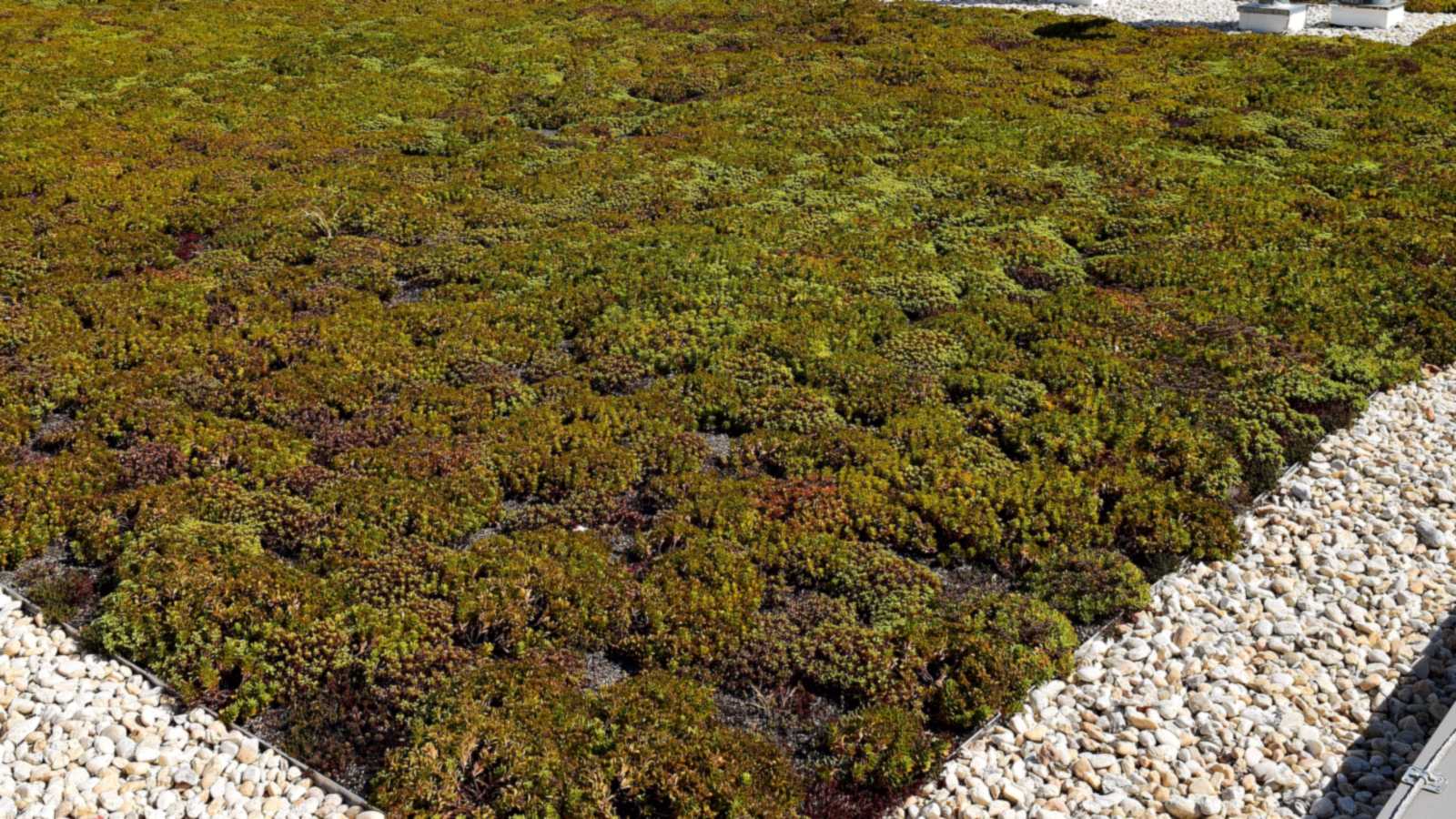
Podium waterproofing polyurea systems protect the decks that sit over basements, car parks and malls. Many podiums in Egypt’s new cities also carry gardens, paving and planters. Once these layers go on, the membrane is buried and hard to reach. So the choices made before the soil arrives decide how the deck performs for years. This guide covers the risks, the documented Krypton routes, the details and the checks.
Contents
- Why podiums and planted roofs are hard to waterproof
- What podium waterproofing polyurea needs to offer
- Krypton’s documented routes for podium decks
- Protection above the membrane
- Drainage and ponding on podium decks
- #toc-6
Podium waterproofing polyurea step by step
Common podium waterproofing polyurea mistakes
Podium and planted roof projects by Target
Request a podium survey in Cairo
Why podiums and planted roofs are hard to waterproof
A normal roof dries in the sun. A podium deck does not. Instead, it stays under soil, paving or screed, and water can sit there for a long time. Roots also look for water and push into weak spots. On top of that, the slab moves with heat and loads, mainly at joints.
Also, repairs are costly, because the crew must lift paving or dig out soil to find a leak. That is why Krypton’s podium decks page asks for a full detail at expansion joints, kerbs, planters, drains, thresholds and façade edges.
What podium waterproofing polyurea needs to offer
A buried membrane has a hard job. In fact, it must hold back water, follow cracks and resist roots and point loads. The Polyurea Rayston datasheet (PDF) reports these values for that pure polyurea:
- Root resistance tested according to CEN/TS 14416:2014.
- Watertight at 5 bar, equal to a 50 m water column (EN 12390-8).
- Crack bridging Class A5 at −10 °C (static) and Class B4.2 (dynamic).
- Maximum elongation of 324% and tear strength of 69 N/mm.
- Impact strength of 24.5 N·m, Class III.
- At 2 mm, indentation resistance equal to level P4 (about 25 kg/cm²) at TH4 (90 °C), per ETAG 005.
However, read each document for what it covers. ETA 16/0148 assesses the Polyurea Rayston roof kit. In that ETA, resistance to plant roots (EN 13948) shows “NPA”, meaning no performance was assessed. So for roots, cite the datasheet line and ask Krypton for the test report.
Krypton’s documented routes for podium decks
Krypton documents more than one route. Meanwhile, the European Organisation for Technical Assessment (EOTA) explains how the ETAs behind these products work.
| Krypton page | Build-up as published | Membrane type |
|---|---|---|
| Podium decks (EN) | Concrete deck → Humidity Primer → Impermax Polyurea H Flex → Colodur | Hot-spray hybrid polyurea (ETE 21/0740) |
| Podium decks (AR) | Names Polyurea Rayston and Impermax ST among common routes | Polyurea Rayston: pure polyurea. Impermax ST: one-component aromatic polyurethane, not a polyurea |
| Gardened roofs (EN) | Polyurea Primer → Impermax Polyurea H → Colodur | Hot-spray hybrid; card says “root-penetration resistant” (ETA 11/062) |
In other words, a pure and a hybrid route both exist. Krypton states these are reference points, not an automatic system choice. Your consultant should pick one and match every layer to its current datasheet.
Protection above the membrane
The layers above the membrane carry most of the risk. For example, Krypton’s podium pages warn against laying finishes without protecting the membrane at thresholds, drains and penetrations. The Arabic page adds that protecting the membrane during tiling or planting is part of the specification.
Krypton’s pages do not set the protection board, drainage layer or soil build-up. So these layers follow the project specification and the landscape design. Agree them before spraying, and keep site traffic off the fresh membrane.
Drainage and ponding on podium decks
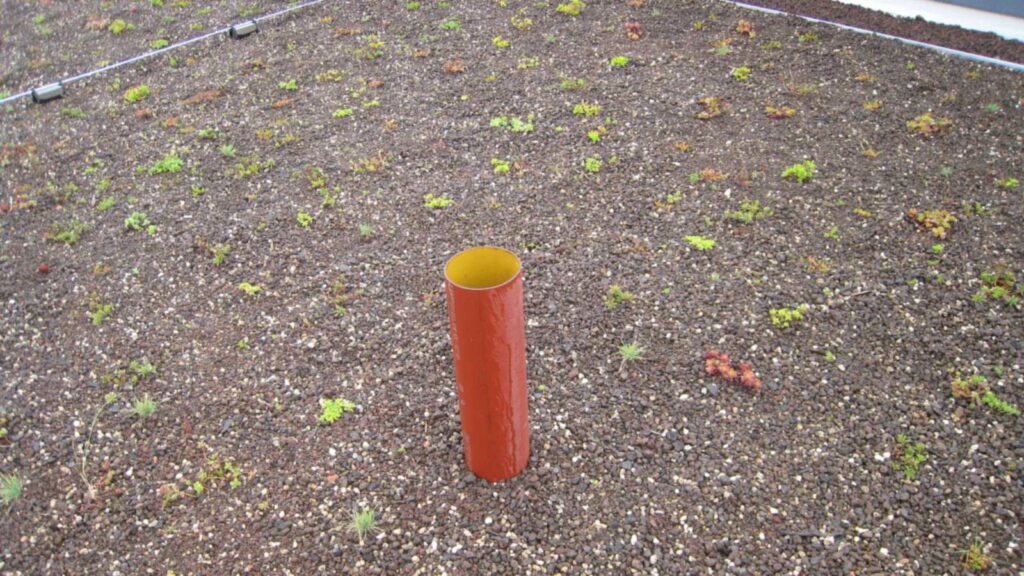
Water that cannot leave the deck will sit on the membrane, so drainage comes first. Krypton’s note “ponding is a design condition” makes a clear point. If a deck will pond, the specification must say so before naming the membrane. Also, a topcoat does not fix a dead-flat deck.
Therefore, check falls and outlets first. Then make sure every drain sits at a low point and stays open under the soil.
Details: planters, upstands, drains and joints
Most leaks start at details, not in the open field. So treat each detail as its own small job:
- Planters and kerbs: take the membrane up the sides and under the edge.
- Upstands and façades: finish the membrane above the soil line.
- Drains and pipes: prime and wrap each sleeve before the main spray.
- Expansion joints: use a designed joint detail. Our guide to expansion joint waterproofing with polyurea will cover the options.
| Zone | Main risk | What to specify |
|---|---|---|
| Open deck | Standing water under soil | Falls and outlets; ponding stated in the spec |
| Planters | Roots and wet soil | Root-resistance evidence; membrane up the planter walls |
| Joints | Slab movement | A designed joint detail |
| Thresholds | Damage during finishing | Protection before tiling or planting |
Podium waterproofing polyurea step by step
Krypton’s podium page sets out a clear working order. We follow the same logic on site:
- First, record the finishes, traffic, deck size and slab condition.
- Next, map joints, kerbs, planters, drains, pipes and upstands.
- Then choose one route and check every layer against its current datasheet.
- After that, work out the quantities. Krypton’s calculator can help here.
- Finally, approve a sample area, record each check and release the deck only when the spec is met.
In short, podium waterproofing polyurea work is mostly planning. The spraying itself is fast, but the details take time.
Common podium waterproofing polyurea mistakes
Krypton’s podium pages list four common errors. First, crews treat the open field as the whole job and skip joints, kerbs, drains and upstands. Second, finishes go on before the membrane is protected. Third, the work closes before checks of moisture, adhesion, thickness and cure. Finally, a car-park traffic spec is copied onto a pedestrian podium.
Podium and planted roof projects by Target
This section lists Target project scope only. It is separate from the product data above.
At Aeon Towers Mall of Arabia, Target carried out two polyurea scopes: “Podium waterproofing” and “Planted Basement roof” (contractor FAS, consultant ECG). Our records describe both as pure polyurea. They do not name the product used.
Frequently asked questions
Does polyurea resist roots?
It depends on the product and its test. The Polyurea Rayston datasheet lists root resistance per CEN/TS 14416:2014. Krypton’s card for Impermax Polyurea H says “root-penetration resistant”. Ask for the test report for the exact product.
Can soil or tiles go straight onto the membrane?
Krypton’s pages say the membrane needs protection during tiling or planting. The exact protection layers come from your project specification.
Pure or hybrid polyurea for a podium?
Both appear in Krypton’s documents. The EN podium page uses a hybrid (Impermax Polyurea H Flex), while the AR page names Polyurea Rayston. Your consultant should choose based on loads, finishes and the evidence each product carries.
Hot or cold applied?
Both Krypton podium routes use hot-spray membranes. For the wider choice, read our hot and cold applied polyurea comparison.
What about the walls below the podium?
Basement walls need their own system. See our guide to foundation waterproofing.
Request a podium survey in Cairo
Send us the deck drawings, the landscape plan or site photos. After a visit, we will propose a podium waterproofing polyurea build-up with its datasheets.
- Office: 48 El-Horreya St, Heliopolis, Cairo
- Phone: +20 120 226 9326
- Email: admin@targetsw-eg.com
- Online: contact Target Engineering
For more background, read our polyurea waterproofing guide. Target also works from offices in Abu Dhabi and Kenitra for regional projects.

[…] Large podiums may suit a sprayed system instead. See our guide to podium and planted roof waterproofing with polyurea. […]