
Table of Contents
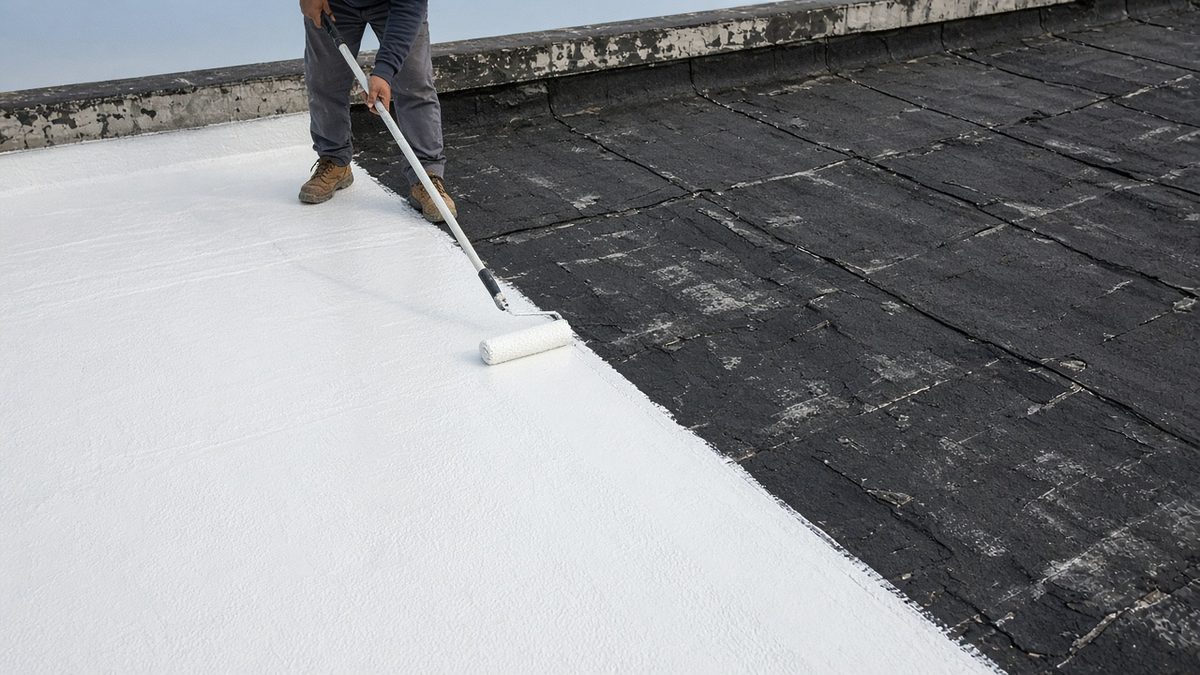
When a roof starts leaking years after its membrane or tiles were laid, the owner’s first thought is usually a full tear-off and starting again. That means days of demolition, debris and noise, and a higher bill. In many cases the alternative is re-roofing over existing membrane: installing a new waterproofing system on top of the old layer after inspecting and preparing it. This article explains when that works and when it does not, using the datasheets of Sikalastic-560, Kemroof PU, Polyurea Rayston X5 and INSUTECH membranes.
Key points
- Overlaying the old layer avoids demolition and debris and shortens roof downtime.
- Key conditions: the old layer must be dry and sound, and the slab must carry any added load.
- Options include acrylic (Sikalastic-560), polyurethane (Kemroof PU), polyurea with X5 as a levelling layer, or new rolls.
- Water trapped under the old system is a major cause of failure and can only be fixed by removing wet areas.
When does re-roofing over existing membrane work?
Overlaying is not a cure for every roof. The old layer becomes the base of the new system, and any defect in it carries through. It works when:
- The old layer is well bonded over most of the area, with limited debonding that can be cut out and repaired.
- There is no water trapped under the waterproofing or in the screed.
- Falls are sound and water does not pond.
- The concrete is structurally sound and the slab can take any added load.
When is tear-off unavoidable?
If water is trapped in the screed or under tiles, the old layer has failed over large areas, or the concrete needs structural repair, removal is not optional. In that case see our repair and rehabilitation service.
Loads matter too: liquid systems are light, but a new sheet layer with a screed on top adds weight to an old slab. On older buildings a light liquid system is usually preferred, with a structural engineer consulted if in doubt.
Re-roofing options
- Reinforced water-based acrylic: Sikalastic-560 lists life extension of failing roofs and is applied over old bitumen felt.
- Solvent-free polyurethane: Kemroof PU lists tiles and old roofing membranes among suitable substrates.
- Polyurea with an X5 layer: Polyurea Rayston X5 expands 3 to 5 times, filling voids and level differences, and serves as a primer on bitumen felt before 2–3 mm of polyurea.
- New rolls: INSUEXTRA P-E and INSUMERIC NC list re-roofing among their uses; see our bitumen membranes article.
Technical comparison of re-roofing systems
| Property | Sikalastic-560 | Kemroof PU | Polyurea Rayston X5 |
|---|---|---|---|
| Type | Water-based PU-modified acrylic | Solvent-free polyurethane | Expanding polyurea (elastomeric foam) |
| Elongation | ~350% (unreinforced) | 367% | > 125% |
| Tensile strength | ~1.5 N/mm² | 6–7 N/mm² | 1.7 MPa |
| Max substrate moisture | < 4% | 5% | < 1.5% |
| Application | Roller or airless spray | Roller or airless spray | Hot plural-component spray, 100–120 bar |
| Consumption | 2.1–2.8 kg/m² reinforced | 0.3 kg/m² per 250 µm; 1.5 kg/m² reinforced | Thin first coat 150–250 g/m², then the rest |
| Final protection | Not required | UV-stable | Topcoat required |
Rayston X5 has an expanded density of 200 kg/m³ and thermal conductivity of 0.044–0.048 W/mK, so it adds some insulation. Its puncture resistance is limited, however, and it is not for trafficked roofs.
Re-roofing over existing membrane step by step
- Survey: tap-test and cut test openings in several places, and measure moisture to rule out trapped water.
- Partial removal: cut out blisters and debonded areas. Kemroof PU requires loose old roofing to be removed by grinding.
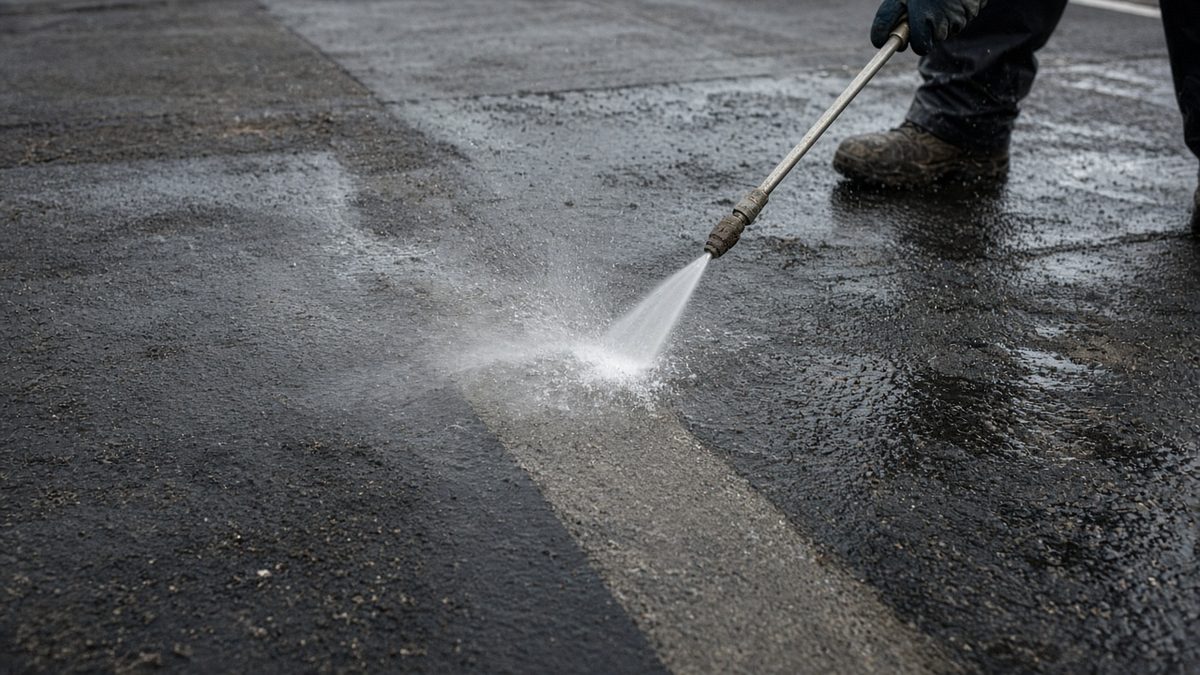
- Cleaning: power-wash dust and algae, remove loose chippings, and let the roof dry completely.
- Repairs: fix laps, joints and penetrations, and form fillets at parapets.
- Primer: system-specific; Kemroof PU uses Sealer E43 on dry surfaces and Kemprim M or AL on metal, while Sikalastic-560 needs a primer on bitumen only for high-reflectivity applications.
- Details first: reinforce corners and joints with fleece before the field.
- Main coats: at datasheet rates, respecting overcoating times.
- Flood test: after full cure; for Sikalastic-560, no more than 50 mm for 48 hours.
Approximate quantities and cost
On a 100 m² roof, the reinforced Sikalastic-560 system needs 210–280 kg plus about 100 m² of fleece with extra for overlaps. The reinforced Kemroof PU system at 1.5 kg/m² needs about 150 kg. These are approximate figures. The cost of demolition and debris removal is almost entirely saved, which often decides the matter.
Common mistakes
- Overlaying trapped water: heat turns it to vapour that lifts the new layer in blisters.
- Washing without removing debonded areas: the new layer will lift with the old one.
- Using a product incompatible with bitumen: some solvents soften bitumen, causing staining and poor adhesion.
- Leaving X5 without a topcoat: it changes colour in sun, and the sheet strongly recommends a protective coat.
- Ignoring falls: re-roofing does not fix ponding; correct the falls first.
Re-roofing with Target Engineering
Target Engineering starts every re-roofing over existing membrane project with a site survey of the old layer, then proposes a suitable system, or recommends tear-off if it is truly needed. See our waterproofing and roofing page and read our guide to liquid roof waterproofing.
Useful references: the European Organisation for Technical Assessment (EOTA) publishes assessment documents for liquid-applied roof waterproofing, and the Al Sa’fat Dubai Green Building System encourages reflective roof solutions that cut heat gain.
FAQ about re-roofing over existing membrane
Can I waterproof directly over tiles?
Yes, if the tiles are firm, dry and have no water beneath. Kemroof PU lists tiles as a suitable substrate; open joints must be repaired.
How do I know if water is trapped under the tiles?
Through test openings and moisture readings at several points, and by watching for ceiling stains that persist long after rain stops.
Does re-roofing add weight to the slab?
Liquid systems are very light compared with screed and tiles, which is a key advantage on older buildings.
Does the roof gain thermal insulation too?
A reflective white acrylic reduces heat absorption, and the expanded X5 layer adds low thermal conductivity.
Need a site inspection or a quotation? The Target Engineering team is ready to help.

[…] Therefore, a roof with loose screed or an old, failed membrane needs more labour before any spraying starts. If your roof already has a membrane, read our guide to re-roofing over an existing membrane. […]
[…] For PVC, EPDM or asphalt felts, Krypton offers Polyurea Primer Flex. For other routes, see our guide to re-roofing over an existing membrane. […]