
Table of Contents
- What is flexible cementitious waterproofing?
- Why flexible slurries suit bathroom waterproofing
- Technical comparison
- Preparing the substrate for bathroom waterproofing
- Bathroom waterproofing application steps
- Consumption
- Where is it used?
- Signs that old bathroom waterproofing has failed
- Common bathroom waterproofing mistakes
- Target Engineering: bathroom waterproofing done right
- Bathroom waterproofing FAQ
Water leaking from a bathroom into the flat below is one of the most frequent defects in Egyptian apartment buildings, and it usually appears only after finishing and tiling, when repairs become expensive and disruptive for the neighbours. That is why bathroom waterproofing with a continuous flexible layer under the tiles is a step that should never be skipped. This article explains how two-component flexible cementitious waterproofing works, reviews the technical values from the official datasheets of Sika Top® Seal-107 Elastic, RAYSTON 170 Elastic, RAYSTON 199 Elastic and MasterSeal 599, and sets out the correct application steps.
Key points
- A two-component flexible cementitious slurry applied directly under the tiles.
- Crack bridging above 1.0 mm and adhesion above 0.5 N/mm², even after water immersion.
- Two crossed coats, with corners, pipes and the floor drain detailed first.
- A flood test before tiling confirms there are no leaks.
What is flexible cementitious waterproofing?
It is a two-component waterproofing mortar: a polymer liquid (acrylic or styrene-acrylic) and a cement powder containing fine aggregates and special additives. Mixed together, they form a slurry applied by brush, trowel or spray that cures into a flexible membrane bonded to concrete and plaster. It combines the adhesion of cementitious materials with the flexibility of polymers, so it tolerates minor movement and hairline cracks without cracking itself.
The Sika Top Seal-107 Elastic datasheet states that it bonds to most substrates such as concrete, cement mortar, stone, ceramics and brick, can be applied on vertical walls and ceilings, and is non-toxic.
Why flexible slurries suit bathroom waterproofing
Crack bridging
Crack-bridging ability of 107 Elastic and RAYSTON 170 Elastic is greater than 1.0 mm at 23 °C, covering existing cracks and those that may open after application.
Stable adhesion, even when wet
Initial adhesion is above 0.5 N/mm² and stays above 0.5 N/mm² after 28 days of water immersion (EN 14891), which matters in permanently wet areas.
Tile-compatible
Because the finished surface is cementitious, tiles can be bonded on top with suitable adhesives once fully cured, usually without extra protection layers.
Technical comparison
| Property | Sika Top Seal-107 Elastic | RAYSTON 170 Elastic | MasterSeal 599 |
|---|---|---|---|
| Standard | EN 1504-2 | EN 1504-2 | — |
| Elongation | 120–140% (ASTM D412) | 65% | 45% (28 days) |
| Crack bridging | >1.0 mm at 23 °C | >1.0 mm at 23 °C | 2 mm layer accommodates 0.5 mm, or 1.2 mm with fibre mesh |
| Water pressure resistance | — | — | +1.5 bar / −1.0 bar |
| Adhesion | >0.5 N/mm² (EN 14891) | >0.5 N/mm² | 1.1 N/mm² |
| Mix ratio (liquid:powder) | 1:2 by weight | 1:3 by weight | 5.7 : 14.3 kg |
| Pot life | 45 min at 25 °C | — | 60 min |
| Density | 1.7±0.2 | 1.7±0.2 kg/l | — |
| Pack | 30 kg (grey and white) | 30 kg (7.5 liquid + 22.5 powder) | 20 kg |
RAYSTON 199 Elastic offers 120–140% elongation in a 20 kg kit, a practical choice when high flexibility is needed on smaller areas. Sika Top Seal-107 Elastic holds a certificate from the Egyptian National Organization for Water and Sewage for drinking water, water permeability and crack bridging, and its VOC content is below 5 g/L.
Preparing the substrate for bathroom waterproofing
- Remove old tiles, weak material, dust and oil down to a sound surface.
- Repair cracks and honeycombing and level the surface as far as possible.
- Form fillets at floor-wall junctions and detail around pipes and the floor drain.
- Pre-wet absorbent surfaces thoroughly, without leaving standing water; the substrate must be dry or slightly damp.
Bathroom waterproofing application steps
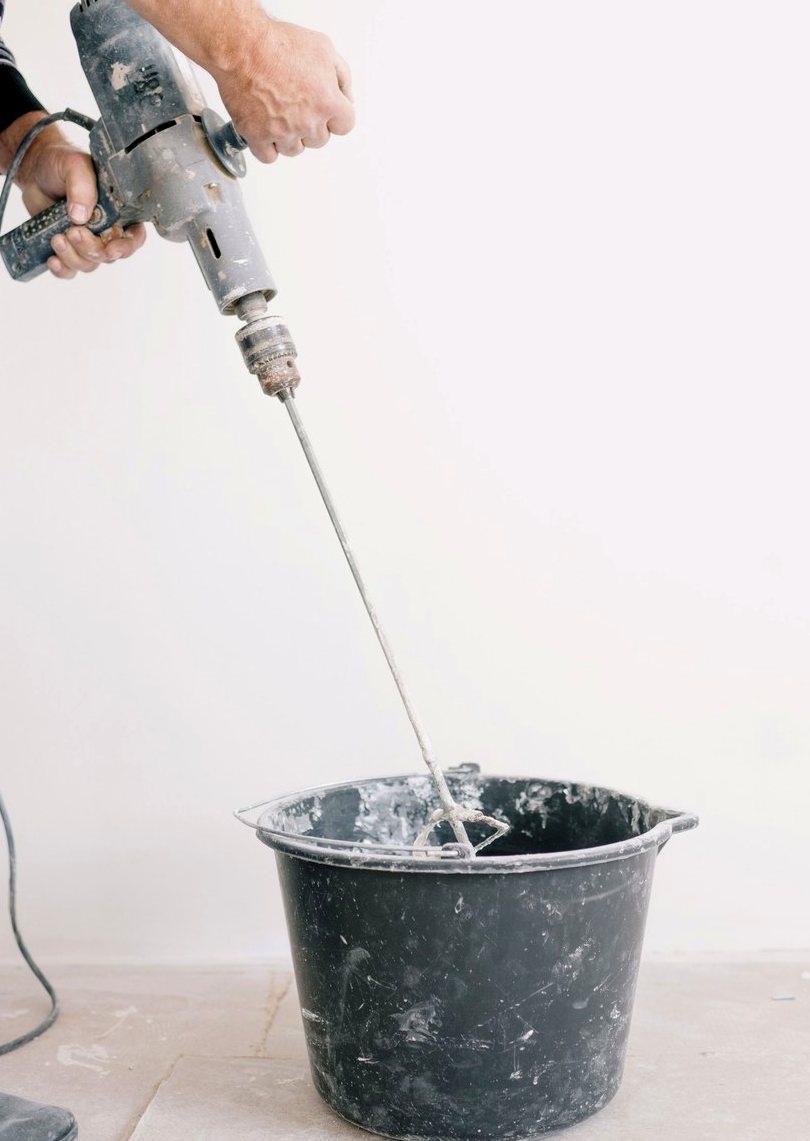
- Mixing: add the powder gradually to the liquid and mix with a low-speed drill (below 500 rpm for 107 Elastic, 400–600 rpm for MasterSeal 599) for at least 3 minutes until homogeneous.
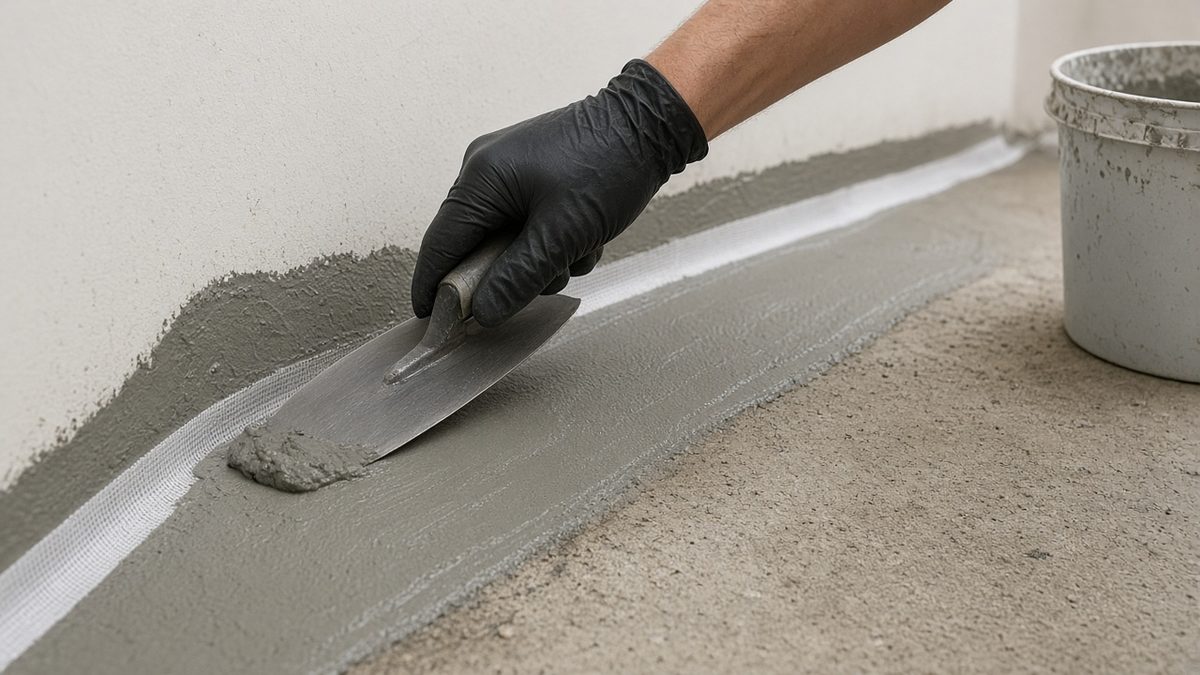
- First coat: brush onto the floor and up the walls to a suitable height, reinforcing corners with tape or fibre mesh where needed.
- Waiting time: 2–6 hours between coats for 107 Elastic, at least 6 hours for MasterSeal 599.
- Second coat: apply at right angles to the first for full coverage; it can be finished with a sponge.
- Curing: protect from rapid drying, direct sun and draughts.
- Flood test: filling the bathroom with water for a sufficient period before tiling is recommended to confirm there are no leaks.
Consumption
- 107 Elastic and RAYSTON 170 Elastic: first coat 1–1.5 kg/m², second coat 0.8–1 kg/m²; a third coat may be needed in areas of severe infiltration.
- Never apply more than 4 kg/m² of 107 Elastic in a single layer.
- MasterSeal 599: 0.75–1 kg/m² per coat, normally two coats; one kit covers 12 m² at 1 mm.
Where is it used?
Besides bathrooms, kitchens and wet areas, the datasheets list terraces and balconies on concrete or old tiles, buried external walls, basements against hydrostatic pressure, water tanks and swimming pools. See our cementitious waterproofing and waterproofing works pages.
Signs that old bathroom waterproofing has failed
Before deciding to redo the waterproofing, look for damp patches or peeling paint on the ceiling directly below the bathroom, white salt efflorescence on adjacent walls, a persistent musty smell, or loose floor tiles that sound hollow when tapped. Any of these usually means water is finding its way through corners or around the drain and pipes, and the permanent fix is to remove the finishes and install a continuous membrane, not simply re-grout from above.
Common bathroom waterproofing mistakes
- Neglecting corners and pipe penetrations: most leaks start at junctions, not in the middle of the floor.
- One thick coat: instead of two crossed coats, leading to cracking and poor uniformity.
- Adding water to the mix: changing the ratio weakens flexibility and bond.
- Applying in cold weather: not below 8 °C for 107 Elastic, nor below 5 °C for MasterSeal 599.
- Tiling without a flood test: loses the chance to find defects before they are covered.
Target Engineering: bathroom waterproofing done right
Target Engineering carries out bathroom waterproofing, as well as kitchen and balcony waterproofing, with approved materials applied to their datasheets, careful substrate preparation, detailed corners and a flood test before handover. Browse our services or contact us to book a site visit.
References: ASTM D412 describes the elongation test cited in the datasheets, and the European Commission’s Construction Products Regulation (CPR) governs CE marking against European standards such as EN 1504-2.
Bathroom waterproofing FAQ
Can I waterproof over old tiles?
The 107 Elastic datasheet allows application on old tiles for terraces and balconies, provided they are sound and clean. In bathrooms it is usually better to reach sound concrete so the drain and pipes can be detailed properly.
How many coats does a bathroom need?
At least two according to the datasheets, with a third in areas of severe infiltration.
When can tiling start?
After the last coat has fully cured and the flood test is passed; the supervisor sets the timing according to temperature and humidity.
Is the material also safe for drinking water tanks?
Sika Top Seal-107 Elastic holds the Egyptian potable-water certificate, which is why it is also used in water tanks.
Need a site inspection or a quotation? The Target Engineering team is ready to help.

[…] SikaTop Seal-107 is described as “slightly flexible”, and Rayston 170 and MasterSeal 541 give an elongation just over 5%. They suit stable surfaces and static hairline cracks; areas that move need the flexible slurries covered in our article on bathroom waterproofing. […]