
Table of Contents
- What is cold bitumen emulsion?
- Why use it for foundation waterproofing?
- Product comparison
- Surface preparation for foundation waterproofing
- Application steps
- On-site sequence
- INSUCOAT WB as a water-based alternative
- Other uses of cold bitumen beyond foundation waterproofing
- Common foundation waterproofing mistakes
- When cold bitumen is not enough
- Target Engineering: foundation waterproofing to specification
- Foundation waterproofing FAQ
Foundations are the only part of a building that cannot easily be repaired once backfilled. With high groundwater in many parts of the Nile Delta and Egypt’s new cities, and salts and sulphates in the soil, foundation waterproofing is essential to protect concrete and reinforcement from corrosion and secure the life of the structure. The most common solution for footings, ground beams and buried walls is cold-applied bitumen emulsion, thanks to easy application and reasonable cost. This article reviews INSUGUARD RB30 and INSUGUARD RB60 by INSUTECH, NIROL-W and NIROL-WM by Modern Waterproofing, and NILOCOAT R by BituNil, using the values in their datasheets.
Key points
- A water-based, solvent-free cold bitumen emulsion, applied without heating.
- A primer coat of diluted emulsion, then at least two coats at right angles.
- Broadcast sand on the wet final coat if screed or blinding goes on top.
- Protect the coating and let it dry before backfilling.
What is cold bitumen emulsion?
It is bitumen emulsified in water with resins and mineral stabilisers, sometimes rubber, giving a brown liquid that can be brushed, rolled or sprayed without heating. After application the water evaporates and the colour changes from brown to black, forming a continuous flexible bituminous film that blocks moisture and water and protects concrete from salts. Being water-based, it is solvent-free and non-flammable, and safer in enclosed spaces than solvent types.
Why use it for foundation waterproofing?
- Salt resistance: the NIROL-W datasheet cites resistance to chlorides and sulphates likely present in groundwater, and INSUGUARD datasheets cite resistance to salts and chemicals.
- Cold applied: no heating or special equipment, saving cost and labour.
- Damp substrates: INSUGUARD RB30 can be applied on damp surfaces and also acts as a concrete curing compound by retaining water.
- Versatile adhesion: to concrete, brick, metal and wood.
Product comparison
| Product | Type | Solids | Consumption | Datasheet notes |
|---|---|---|---|---|
| INSUGUARD RB30 | Water-based rubber bitumen emulsion | 30±3% (ASTM D2939) | 3–4 m²/kg/coat | Apply 5–45 °C; damp surfaces |
| INSUGUARD RB60 | High-bitumen rubberised emulsion | 60±3% (ASTM D2939) | 2–4 m²/kg/coat | 3–4 h between coats; conforms to ASTM D1227 Type III Class I; above 10 °C |
| NIROL-W | Bitumen-resin emulsion | 38–45% | 750–1000 g/m² (2 coats) as waterproofing; 250 g/m² as protective coat | ASTM D1227 Type III Class I and DIN 18195 part 2 |
| NIROL-WM | Bitumen-resin emulsion | 25–32% | Depends on substrate | ASTM D1227 Type III Class I; bone dry ~2 h |
| NILOCOAT R | Rubberised bitumen damp-proofing coating/adhesive | 40–50% | 0.6–0.8 kg/m² per coat × 2 | 600% elongation (ASTM D412); no re-emulsification in water |
Surface preparation for foundation waterproofing
- Clean off dust, curing-compound residues, oil and grease.
- Remove protrusions and brittle concrete and repair defects to an even surface.
- Detail corners and junctions of footings with ground beams and columns.
Application steps
- Stir the material well before use.
- Primer coat: dilute the same emulsion with 15–20% water for INSUGUARD, or 10–20% for NIROL-W, and let it dry. Increase dilution on very porous surfaces or when spraying.
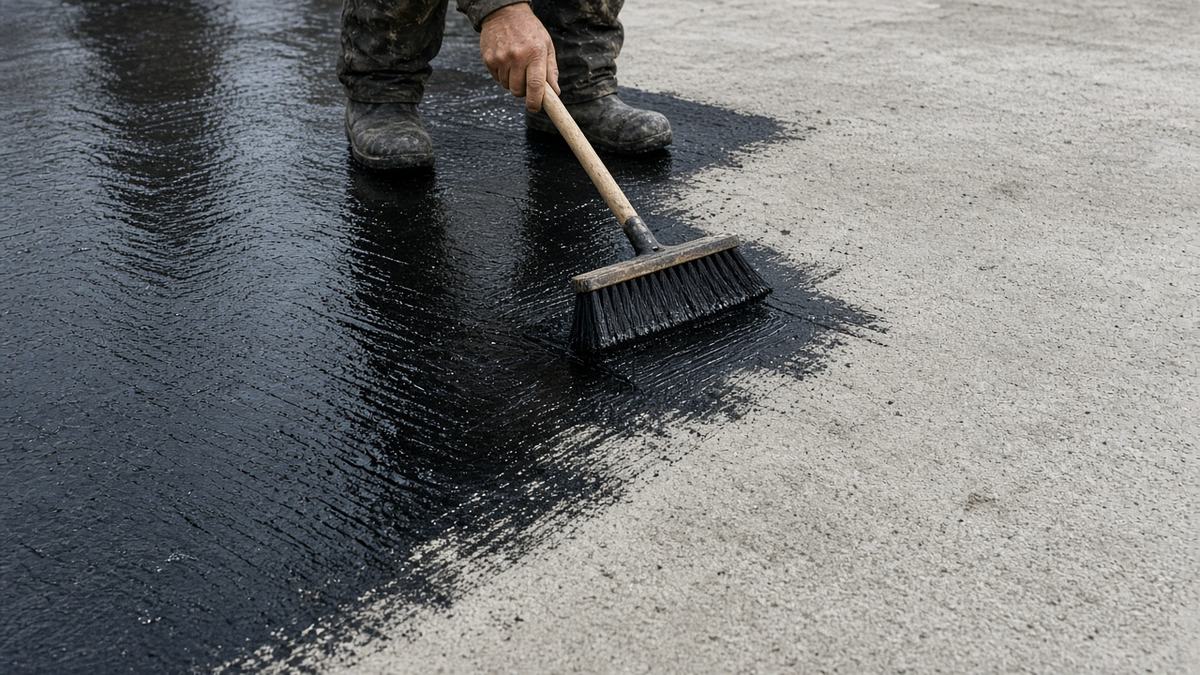
- First coat: diluted 5–10% if needed for INSUGUARD, or undiluted, by brush, roller or airless spray, covering all pores, joints and corners evenly.
- Second coat: at right angles to the first. With NIROL-W, start after 20–30 minutes once the colour turns from brown to black; with INSUGUARD RB60, after 3–4 hours.
- Third coat: where higher protection is needed; the RB30 datasheet notes two or three coats are normally required.
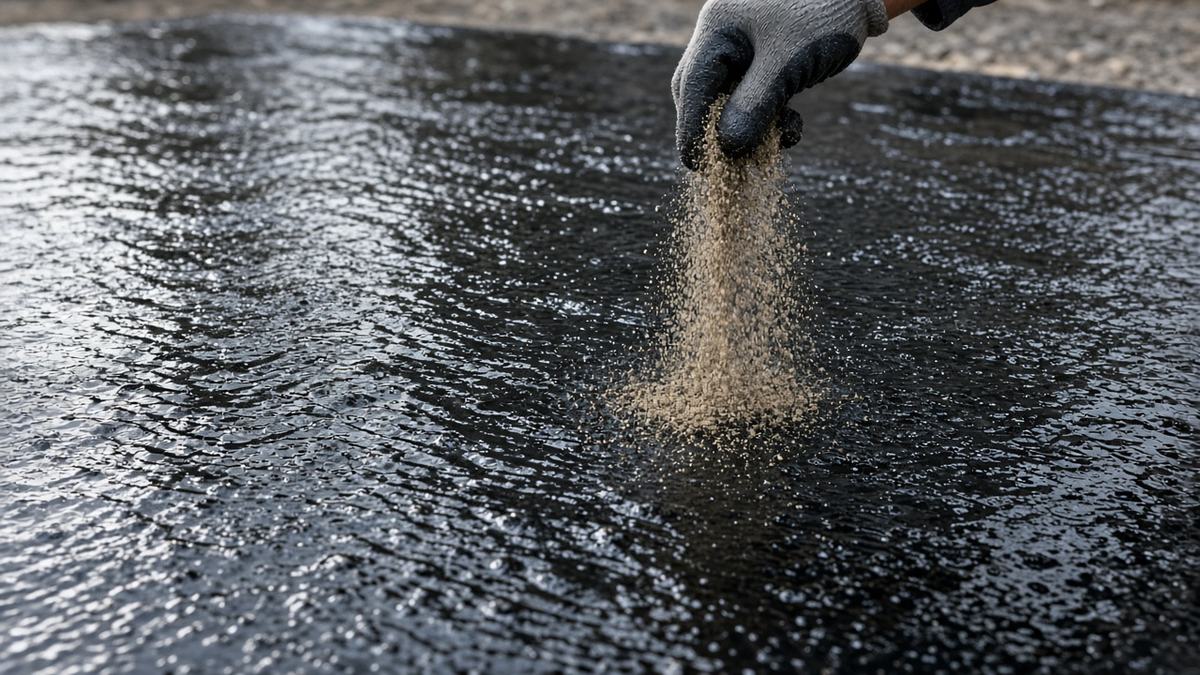
- Sand blinding: if screed or blinding concrete will be placed on top, broadcast clean, dry, sharp sand onto the wet final coat, then brush off the excess once dry. The NILOCOAT R datasheet requires a minimum 50 mm screed over horizontal applications.
- Protection before backfill: protect the coating from damage during backfilling, using boards or polyethylene sheeting as designed.
On-site sequence
Waterproofing usually starts after stripping footing and ground-beam formwork and treating the concrete, just before backfilling. Coat the top and sides of every footing and beam, extending up the column necks above the backfill level. Work in organised stages so no coated area is left exposed for long or trampled by crews. After drying, inspect visually for thin or missed spots and recoat before backfilling with clean soil in compacted layers.
INSUCOAT WB as a water-based alternative
INSUTECH also offers INSUCOAT WB; its datasheet gives 4 m²/kg per coat for a 125-micron dry film, protected by a 150-micron polyethylene sheet. It resists salts such as chlorides, is used for damp-proofing foundations in contact with the water table, and is applied between 5 and 45 °C.
Other uses of cold bitumen beyond foundation waterproofing
- Footings, ground beams, retaining walls and basements in contact with soil.
- Concrete and masonry in contact with groundwater.
- Primer for bitumen membranes (INSUGUARD RB60 and NIROL).
- Protective coat for built-up bituminous roofs.
- Damp-proofing wet areas and plant rooms, and maintenance of existing waterproofing (NILOCOAT R).
Common foundation waterproofing mistakes
- One thin coat: not enough for a continuous film; datasheets specify at least two coats.
- Skipping the primer: reduces penetration and bond.
- Backfilling before drying: scours the coating and leaves bare areas.
- No sand blinding before screed: causes slip and poor bond.
- Pinholes: the NILOCOAT R datasheet warns that any small hole destroys the vapour seal.
- Storing pails in the sun: keep under cover, away from sun and heat, and frost-free.
When cold bitumen is not enough
For deep basements under high groundwater pressure, a stronger system such as double-layer reinforced bitumen membranes or crystalline waterproofing is preferable, with cold bitumen kept as primer or a secondary layer. The engineer decides based on the soil report and water level.
Target Engineering: foundation waterproofing to specification
Target Engineering carries out foundation waterproofing for footings, ground beams and retaining walls, choosing the material and system for the water level and soil type and applying the coats and rates stated in the datasheets. See our waterproofing works, bituminous sheets and polyethylene sheets pages, or contact us before excavation starts.
References: ASTM D1227 for emulsified asphalt, and the Egyptian Organization for Standardization and Quality.
Foundation waterproofing FAQ
How many coats do foundations need?
A diluted primer coat, then at least two coats, with a third where higher protection is required.
Can it be applied on damp concrete?
INSUGUARD RB30 can be applied on damp surfaces, but there must be no standing water.
How many kilos per square metre?
NIROL-W 750–1000 g/m² for two coats, NILOCOAT R 1.2–1.6 kg/m² for two coats, and INSUGUARD RB30 at 3–4 m² per kg per coat.
Cold bitumen or membranes?
Cold bitumen is faster and cheaper and suits damp-proofing, while membranes are thicker and more resistant to puncture and water pressure.
Need a site inspection or a quotation? The Target Engineering team is ready to help.

[…] Target Engineering installs SBS modified bitumen membrane systems on roofs, foundations and green roofs, selecting the right grade for each project and supervising details and laps. See our bituminous sheets and waterproofing and roofing pages, and our guide to foundation waterproofing. […]
[…] Basement walls need their own system. See our guide to foundation waterproofing. […]
[…] bitumen coatings work well for foundation waterproofing where soil is only damp, which is classic damp proofing. However, a raft that sits in groundwater […]
[…] For example, a basement may use an external membrane or a cold bitumen coating, as in our foundation waterproofing […]