
Table of Contents
- Why do metal roofs leak?
- Metal roof waterproofing systems
- Metal roof waterproofing materials: technical data
- Metal roof waterproofing step by step
- Approximate quantities for a hangar
- Common metal roof waterproofing mistakes
- Metal roof waterproofing with Target Engineering
- FAQ about metal roof waterproofing
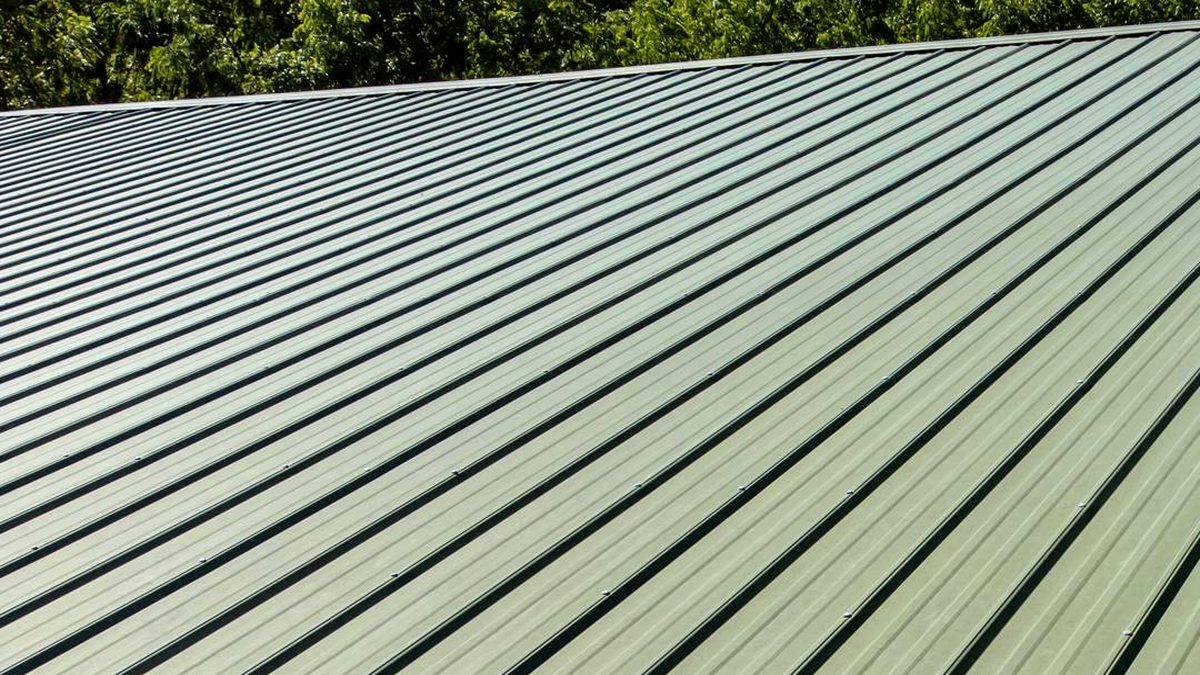
Metal roofs on factories, warehouses and hangars are quick to build and economical, but over the years they suffer two problems: leaks at fasteners and sheet laps, and rust that starts at edges and holes. Metal roof waterproofing covers the whole roof with a continuous, flexible membrane that seals these weak points and protects the steel. This article draws on the datasheets of PU Primer, Rayston PU AL Primer and Impermax Polyurea H Flex Alum by KRYPTON and Kemroof PU by PROKEM.
Key points
- Most metal roof leaks start at fasteners, sheet laps and gutters, not in the sheet itself.
- Metal is a difficult substrate and needs cleaning, abrading and a dedicated primer such as PU Primer or Kemprim M/AL.
- Impermax Polyurea H Flex Alum: 400% elongation, a sun-reflective aluminium effect, sprayed at 2 kg/m².
- Kemroof PU is applied by roller or spray and handles −40 to +90°C.
Why do metal roofs leak?
Metal sheets expand and contract noticeably between hot days and cool nights. With repeated movement, fastener holes widen, rubber washers fail and side laps open up. Water also collects in gutters and low points, where rust begins. The waterproofing must therefore be elastic enough to move with the metal without cracking.
Why is metal hard to bond to?
Metal is non-porous and smooth, and is often covered with oil, rust or galvanising. The PU Primer sheet lists metals and stainless steel among difficult substrates that need an adhesion-promoting primer.
Metal roof waterproofing systems
- Hot-sprayed aluminium polyurea: Impermax Polyurea H Flex Alum is an elastic membrane with aluminium pigments for sun-reflective properties.
- Solvent-free polyurethane by roller or spray: Kemroof PU lists metal roofs among its uses, with Kemfelt reinforcement at joints.
- With thermal insulation: polyurethane foam can be sprayed and then covered with polyurea, as explained in our spray foam roof insulation article.
Metal roof waterproofing materials: technical data
| Property | Impermax Polyurea H Flex Alum | Kemroof PU | PU Primer | Rayston PU AL Primer |
|---|---|---|---|---|
| Function | Sprayed membrane | Liquid membrane | Adhesion primer for metal and tiles | Aluminium/MIO anticorrosion primer |
| Hardness | 90A/40D | 80 Shore A | — | — |
| Elongation / tensile | 400% / 14 MPa | 367% / 6–7 N/mm² | — | — |
| Adhesion | Steel 3.6 MPa (with PU Primer) | 1.2 N/mm² | — | — |
| Consumption | 2 kg/m² | 0.3 kg/m² per 250 µm, two coats | 50–100 g/m² | 8.4–5.58 m²/l (80–120 µm dry) |
| Application | Hot spray rig, 135–170 bar | Roller or airless | Brush or roller | Roller |
| Service / heat resistance | — | −40 to +90°C | — | 145°C prolonged / 175°C short-term |
A dash (—) means not stated in the datasheet. Polyurea H Flex Alum is rated B2 in the DIN 4102-1 fire test, and PU Primer holds European Technical Assessment ETA 16/149.
Metal roof waterproofing step by step
- Survey: record corroded sheets, loose fasteners and open laps, and replace damaged sheets before waterproofing.
- Cleaning: wash and degrease. Non-ferrous and galvanised metals are cleaned with an alkaline solution and rinsed with water, per the Rayston PU AL Primer sheet.
- Rust removal: wire-brush or abrade to at least St 2, with Sa 2½ recommended to ISO 8501-1.
- Primer: PU Primer at 50–100 g/m² by brush or roller, overcoated between 1 and 4 hours later; or Rayston PU AL Primer as an anticorrosion layer at 80–120 µm dry. With Kemroof PU, use Kemprim M or Kemprim AL and leave overnight.
- Weak points first: cover fastener heads, laps and gutters, reinforcing joints with fabric in the Kemroof PU system.
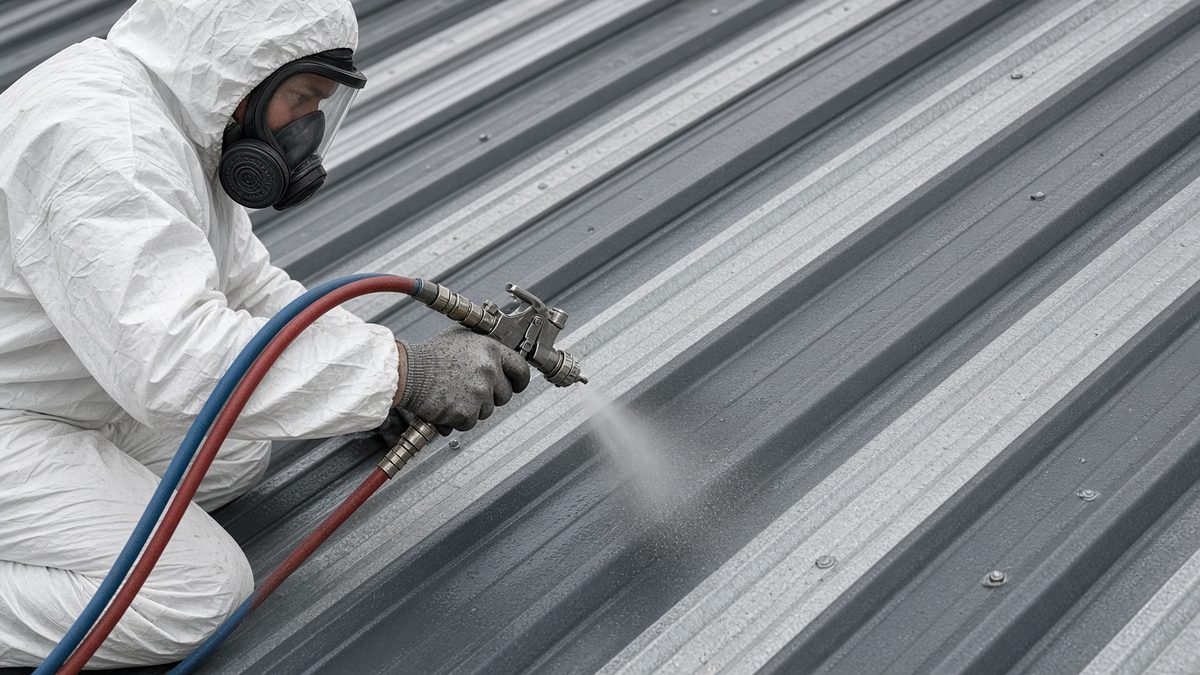
- Membrane: spray polyurea at 2 kg/m² with component A at 65°C and B at 70°C, or roll Kemroof PU in two coats 6–48 hours apart.
- Topcoat: where extra UV protection is required, the polyurea sheet lists Impertrans or Colodur.
Approximate quantities for a hangar
A 1,000 m² metal roof needs roughly 2,000 kg of polyurea at 2 kg/m², plus 50–100 kg of PU Primer. A two-coat Kemroof PU system (about 0.6 kg/m² for 500 µm dry) needs about 600 kg. These are approximate figures; corrugations make the true surface larger than the plan area, which must be measured on site.
Common metal roof waterproofing mistakes
- Spraying unabraded or unprimed metal: the Impermax 2K Flex VR sheet warns of deformation, cracks and adhesion failure.
- Applying PU Primer too thickly: the sheet notes that excess shows as haze or droplets, does not improve adhesion and must be removed.
- Missing the overcoat window: with PU Primer, the membrane must go on within 4 hours.
- Ignoring fasteners and laps: they cause most leaks and need treating before the main coat.
- Spraying on a windy day: overspray drifts onto cars and neighbouring buildings, and mixing suffers.
- Estimating from plan area only: corrugations add surface.
Metal roof waterproofing with Target Engineering
Target Engineering waterproofs metal roofs and hangars with polyurea and polyurethane systems, detailing fasteners and laps and keeping crews safe on metal decks. See our polyurea and polyurethanes, polyurea waterproofing works and waterproofing and roofing pages, and read about heat-insulating roof coating.
Useful references: ASTM D4541 covers pull-off adhesion testing of coatings on metal, and the Al Sa’fat Dubai Green Building System encourages heat-reflective roofs.
FAQ about metal roof waterproofing
Isn’t replacing the screws enough?
It may help for a while, but sheet movement will open the holes again. A continuous elastic membrane seals fasteners and laps together.
Will it make the hangar cooler?
The reflective aluminium finish of Polyurea H Flex Alum reduces solar absorption; for a bigger drop, add polyurethane foam beneath the membrane.
Can rusty sheets be waterproofed?
Yes, after removing loose rust to at least St 2 and using an anticorrosion primer such as Rayston PU AL Primer.
Does work inside the building have to stop?
Usually not: the work is done from the roof, and polyurea cures in seconds.
Need a site inspection or a quotation? The Target Engineering team is ready to help.

No comment